Bristol is the largest conurbation in South West England. The extent of its built-up area is not well-defined but its population is of the order of 500,000 - about 10% of the region’s. Bristol is not a city I enjoy going to but it is well-known for its art scene – Banksy is a Bristolian – and some current shows seemed worth a visit.
The Arnolfini arts centre moved to the run-down docks area of central Bristol 40 years ago and regards itself as having set a precedent for Tate Liverpool, the BALTIC and even the Guggenheim Bilbao as a force for regeneration. Looking at this building, just round the corner from the Arnolfini, it’s clear that there is still more to be done.
The current exhibition at the Arnolfini is Richard Long TIME AND SPACE. Long ,like Banksy, is a Bristol artist with a global reputation – for example, CAPC in Bordeaux owns nine of his works including two stone lines (Slate Line Cornwall 1981 left) – but has had shows at the Arnolfini since 1972. Long’s work can be described as conceptualist and minimalist but it also conveys the artist’s personal response to his environment. There seem to be three main areas of activity. He is probably best-known for his sculptures – assemblies of stones in the landscape or indoors, like Time and Space (2015, below) created for this exhibition:
and sculptural images like Bristol 1967/2015, recreated for it:
There are also some of his textworks:
and drawings using mud – on driftwood:
and on a larger scale directly onto the gallery walls in the form of Muddy Water Falls, 2015 made with mud from the banks of the Avon:
Long has also created Boyhood Line, 170 metres of white limestone on The Downs at Clifton in Bristol as part of the Arnolfini show.
Boyhood Line and Richard Long TIME AND SPACE continue until mid-November.
At the RWA (Royal West of England Academy) in Clifton are two exhibitions which will soon be ending. The first is Peter Randall-Page and Kate MccGwire. At first sight, one of Randall-Page’s sculptures, Wing (2009 below), has something in common with Long’s arrangements of stones, but the terra cotta tile arrangement was inspired by a microscopic study of a grasshopper wing:
The bronzes in the foreground, Inside Out (2014, above), like much of his work, are inspired by biological shapes and forms. Kate MccGwire draws from nature even more directly making complex abstract geometries with feather surfaces. Skirmish (2015, below) is made with pheasant feathers and shown in an antique dome:
while Gyre (2012, below) was made over four years with crow feathers:
Peter Randall-Page and Kate MccGwire ends on 10 September.
The other RWA show is Into the Fields: The Newlyn School and Other Artists which was at Penlee House Penzance earlier as Sons and Daughters of the Soil. I’ve posted about art in Cornwall several times and the Newlyn artists as recently as 2013. On this occasion the net has been spread wider than Penlee’s excellent collection to fetch in other painters en plein air under the influence of the Barbizon School with works like George Clausen’s In the Orchard (1871, below left) and Henry La Thangue’s Landscape Study (c1889, below right), neither set in Cornwall:
There are, as to be expected, quite a few works by Harold Harvey, for example, Blackberrying (1917, below left) and The Clay Pit (1923, below right):
And, of course, Samuel John ‘Lamorna’ Birch, for example his Morning Fills the Bowl (1926, below top) and Laura Knight’s impressive if busy Spring (1916-20, below lower):
The model in this picture is Ella Naper, better-known in the same artist’s famous Artist and Model.
Into the Fields: The Newlyn School and Other Artists ends on 6 September.
ADDENDUM 11 September
If my reservations about Bristol seem unwarranted to those who like the city, they should read Bristol, the European capital of green nannying and bureaucracy, in the Spectator on 5 September by a Bristolian, Anthony Whitehead – and the comments.
Showing posts with label RWA. Show all posts
29 August 2015
7 September 2014
John and Paul Nash at RWA Bristol
Perhaps because Britain has a hereditary monarchy, we seem to look kindly on dynastic successions (acceptable even to the political left – the ‘Red Princes and Princesses’) but are reluctant to consider brothers as equals. One Johnson or Dimbleby is regarded as numero uno – fairly or possibly unfairly, for example in the case of the Attenborough brothers. One wonders if some people will ever forgive Ed Miliband for overturning what was perceived as the correct order of things. When it comes to the painters John Nash (1893-1977) and Paul Nash (1889- 1946), it’s Paul who is the more highly regarded, so part of the interest of Brothers in Art: John and Paul Nash at the Royal West of England Academy (RWA) Bristol is to see whether in this case the consensus view is the correct one.
This show is part of a wider RWA activity:
Although there are similarities in the brothers’ approach to landscape in the years after the First World War – John’s The Edge of the Plain (1926, below top) and Paul’s Dymchurch (c1921-4 below lower):
Paul’s interest in modernism would lead to Landscape of the Megaliths (1934, below top) and to the surrealistic Equivalents of the Megaliths (1935, below lower):
The absence of any wartime works means that the visitor cannot progress to the next stage of Paul’s work such as his celebrated Battle of Britain, 1941 (see a post here earlier this year) and Totes Meer (Dead Sea) 1940-1. Similarly, there is no opportunity to examine the relationship of John’s The Farm Pond (1940, below top) to his Oppy Wood, 1917: Evening (1918, below lower):
However, there are some interesting examples of John’s skill as an engraver and illustrator, something which is explored further in Paul Gough’s catalogue Brothers in Art: John and Paul Nash and the Aftermath of the Great War. For a much more informed opinion than this one, see Andrew Lambirth’s review in the Spectator.
Brothers in Art: John and Paul Nash ends on 14 September.
This show is part of a wider RWA activity:
Back from the Front - Art, Memory and the Aftermath of War is a programme of exhibitions and events at the RWA commemorating the start of The Great War, and 75th anniversary of the start of the Second World War. It explores the theme of conflict and memory across a series of interrelated exhibitions …So it is disconcerting that although both brothers were official war artists in both World Wars when they produced major paintings, there are only peacetime works, landscapes mostly, in Brothers in Art, some from just before the First World War, the majority from the interwar years. Accepting this constraint, among the 40-odd items on display, there are some interesting pieces to see, particularly works by John which are less familiar than those of his brother, for example, A Gloucestershire Landscape (1914, below top) and The Cornfield, (1918, below lower):
Although there are similarities in the brothers’ approach to landscape in the years after the First World War – John’s The Edge of the Plain (1926, below top) and Paul’s Dymchurch (c1921-4 below lower):
Paul’s interest in modernism would lead to Landscape of the Megaliths (1934, below top) and to the surrealistic Equivalents of the Megaliths (1935, below lower):
The absence of any wartime works means that the visitor cannot progress to the next stage of Paul’s work such as his celebrated Battle of Britain, 1941 (see a post here earlier this year) and Totes Meer (Dead Sea) 1940-1. Similarly, there is no opportunity to examine the relationship of John’s The Farm Pond (1940, below top) to his Oppy Wood, 1917: Evening (1918, below lower):
However, there are some interesting examples of John’s skill as an engraver and illustrator, something which is explored further in Paul Gough’s catalogue Brothers in Art: John and Paul Nash and the Aftermath of the Great War. For a much more informed opinion than this one, see Andrew Lambirth’s review in the Spectator.
Brothers in Art: John and Paul Nash ends on 14 September.
8 October 2011
Emin and Riley at RWA Bristol
Better late than never, I visited the Royal West of England Academy (RWA) in Bristol just in time to see some of their autumn exhibitions before they close on 11 October. A registered charity, the RWA is one of the five Royal Academies of Art in the UK. Its galleries and permanent collection may be in a fine Victorian building in superior Clifton, but RWA is a key part of the busy arts scene in Bristol, famous for the street artist Banksy. The RWA balcony is currently hosting Damien Hirst’s Charity (2003), a painted bronze almost certainly cast at Pangolin.
A previous post described Bridget Riley's exhibition earlier in the year at the National Gallery. In Bristol a selection of her screenprints going back to the 1960s is on display together with works by Michael Kidner (1917-2009) over the same period. Kidner also began with Optical Art but moved towards a constructive abstractionism reflecting his interest in science and mathematics. He would probably have been fascinated by Luke Jerram’s Aeolus, an ‘acoustic and optical pavilion’, its ‘Making’ being the subject of a small exhibition at RWA. The real thing, quite a substantial structure, is currently elsewhere in SW England - at the Eden Project in Cornwall - but Jerram, who is Bristol-based, is apparently looking to find it a permanent home.
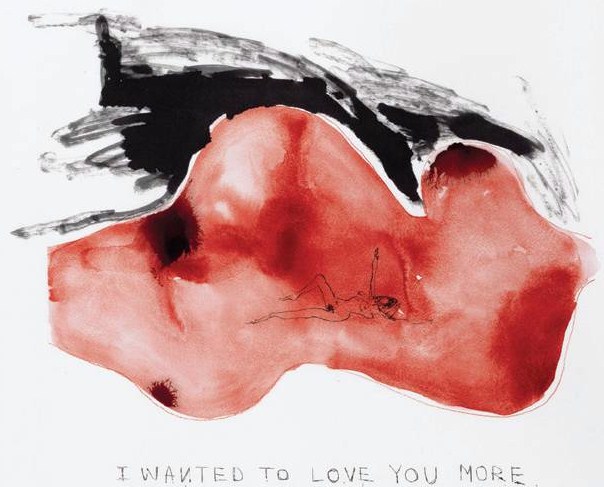
Quite at odds with all this cool rationality is the combined collection by Louise Bourgeois and Tracey Emin, Do Not Abandon Me. Bourgeois (1911-2010) is probably best-known for her 30 foot spider sculpture, Maman, exhibited in Tate Modern’s Turbine Hall in 1999. She is also regarded as the founder of the biographical and symbolic ‘confessional art’ and has been called Tracey Emin’s spiritual grandmother. Working to the very end of her long life, she gave Emin a final set of gouaches of male and female torsos. 16 of these have been adorned by Emin with small scratchy drawings and handwriting, unsurprisingly with “themes of an adult nature” to quote the RWA. Emin became an Royal Academician (RA) at the UK’s premier Royal Academy of Art (also RA) in 1997. Emin recently donated a neon artwork sign, More Passion, to the Government Art Collection which has now been installed in No 10 Downing Street. A year ago she declared her support for the current government, particularly the Conservatives. David Cameron's wife, Samantha, studied art in Bristol at what is now the University of the West of England, UWE.
ADDENDUM 17 OCTOBER
After posting the above on 8 October I tweeted:
There was one reply from @KaiDeyDey, the “personal account” of Karen Drake who describes herself as Finance Manager at Spike Island. This, its website explains, is a “centre for the production and exhibition of art and design based in an 80,000 square foot former Brooke Bond tea packing factory” in Bristol:
I admit that when I describe art I concentrate on matters factual, and possibly useful to any readers, and keep my reactions to the minimum, though I think they are discernible. Not least, this is because I have only a tenuous understanding of the critical language which the visual arts world seems to have adopted. If that makes me unwelcome at Spike Island, so be it, although I would have thought it might be prudent for an organisation which appears to be highly dependent on public funding to accept that taxpayers come in all shapes and sizes.
A previous post described Bridget Riley's exhibition earlier in the year at the National Gallery. In Bristol a selection of her screenprints going back to the 1960s is on display together with works by Michael Kidner (1917-2009) over the same period. Kidner also began with Optical Art but moved towards a constructive abstractionism reflecting his interest in science and mathematics. He would probably have been fascinated by Luke Jerram’s Aeolus, an ‘acoustic and optical pavilion’, its ‘Making’ being the subject of a small exhibition at RWA. The real thing, quite a substantial structure, is currently elsewhere in SW England - at the Eden Project in Cornwall - but Jerram, who is Bristol-based, is apparently looking to find it a permanent home.
Quite at odds with all this cool rationality is the combined collection by Louise Bourgeois and Tracey Emin, Do Not Abandon Me. Bourgeois (1911-2010) is probably best-known for her 30 foot spider sculpture, Maman, exhibited in Tate Modern’s Turbine Hall in 1999. She is also regarded as the founder of the biographical and symbolic ‘confessional art’ and has been called Tracey Emin’s spiritual grandmother. Working to the very end of her long life, she gave Emin a final set of gouaches of male and female torsos. 16 of these have been adorned by Emin with small scratchy drawings and handwriting, unsurprisingly with “themes of an adult nature” to quote the RWA. Emin became an Royal Academician (RA) at the UK’s premier Royal Academy of Art (also RA) in 1997. Emin recently donated a neon artwork sign, More Passion, to the Government Art Collection which has now been installed in No 10 Downing Street. A year ago she declared her support for the current government, particularly the Conservatives. David Cameron's wife, Samantha, studied art in Bristol at what is now the University of the West of England, UWE.ADDENDUM 17 OCTOBER
After posting the above on 8 October I tweeted:
New post: Time almost up to see Tracey Emin and Bridget Riley @rwabristolwhich @rwabristol RT'd.
There was one reply from @KaiDeyDey, the “personal account” of Karen Drake who describes herself as Finance Manager at Spike Island. This, its website explains, is a “centre for the production and exhibition of art and design based in an 80,000 square foot former Brooke Bond tea packing factory” in Bristol:
“@WestIndep: http://bit.ly/oMgzHG” it reads like it was written by someone who read the brochure but didn't go through the door.Fair enough, but I did go through the door, or in the case of the Emin and Bourgeois show, through the thick black curtains (presumably intended to shield such graphic works from delicate Bristolian eyes.)
I admit that when I describe art I concentrate on matters factual, and possibly useful to any readers, and keep my reactions to the minimum, though I think they are discernible. Not least, this is because I have only a tenuous understanding of the critical language which the visual arts world seems to have adopted. If that makes me unwelcome at Spike Island, so be it, although I would have thought it might be prudent for an organisation which appears to be highly dependent on public funding to accept that taxpayers come in all shapes and sizes.
Subscribe to:
Posts (Atom)